Forestry mulching & brush clearing
Open a trail, reclaim a field edge, or bring an overgrown slope back within reach. Our FAE RCU-55 turns woody brush into mulch in place.
Serving Connecticut, Massachusetts and Rhode Island

What do you want to open up?
An old pasture, a trail through the woods, and a bank behind a building each need a different finish. We walk the area with you and choose where the mulcher belongs, where hand work makes sense, and which trees and understory should stay.
Field edges & old pastures
A field can lose a little width each year as brush grows in from the tree line. We can reopen the strip you want to mow, leave a pocket of cover for wildlife, and keep the shade trees along a fence. Old wire matters here. Where it disappears into brush, that section needs a closer look before machine work.
Trails & access lanes
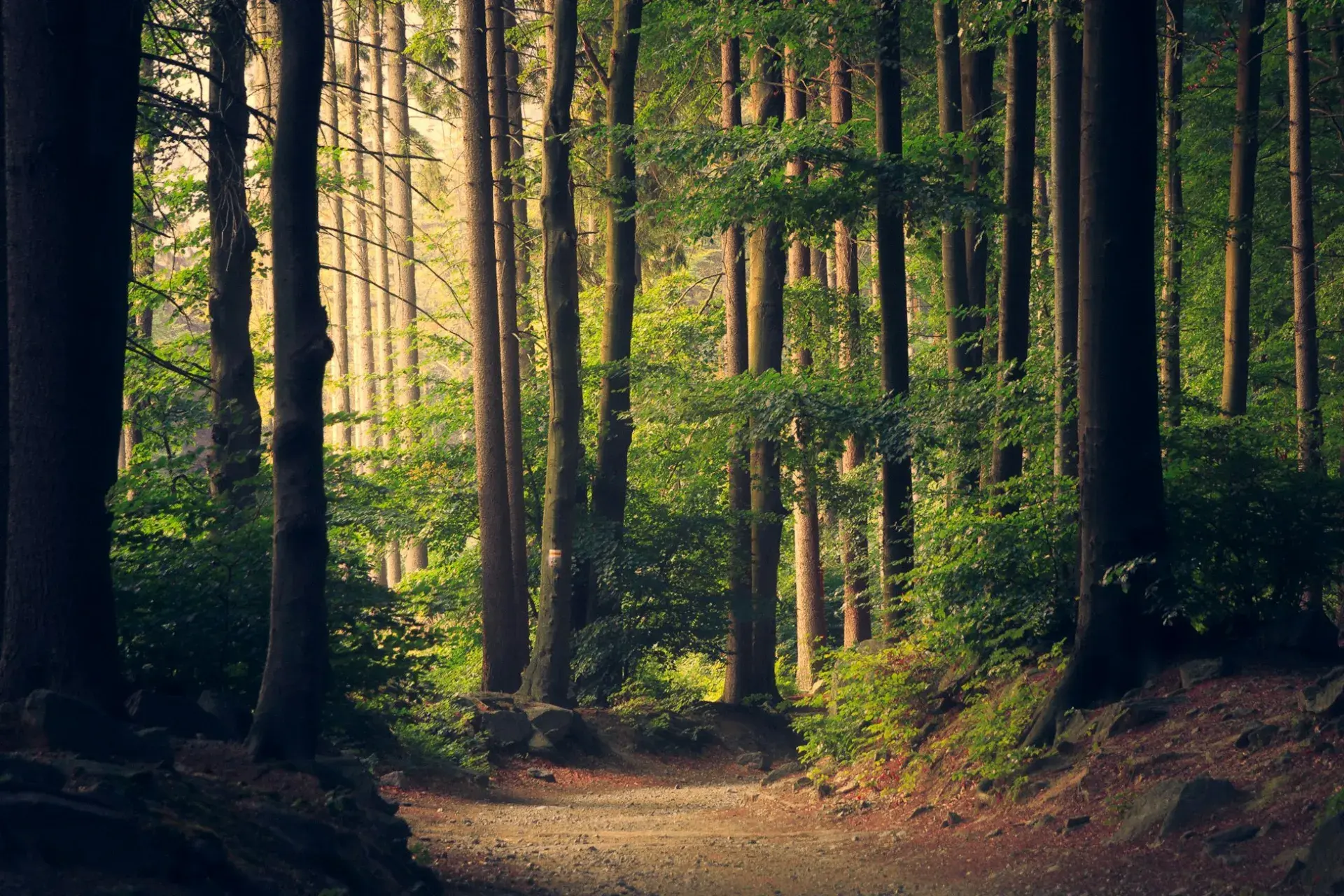
The opening for a walking trail can be quite different from the one a tractor needs at a bend. We clear to the width and overhead clearance the route actually needs. A stone wall, a stand of ferns or a mature tree can stay as a boundary, with hand cutting at the tight spots.
Slope mowing & overgrown banks
Our remote-controlled carrier lets the operator work from off the machine. It gives us an option on banks that are difficult to maintain by conventional mowing. We look at the footing, the approach and what lies downhill. Soft ground, loose stone or a wetland edge may call for another approach or a different time of year.
Invasive shrub thickets
Dense shrubs can crowd out young trees and make an entire patch hard to reach. Mulching can open the patch for follow-up work. The species determines the next step. For example, a stand of knotweed needs its own plan because pieces of stem and underground growth can start new plants when moved with soil or equipment.
Working with the FAE RCU-55
The RCU-55 is a compact tracked carrier with a front-mounted mulching head. An operator controls it by remote from a position with a view of the work. The head breaks down standing brush where it grows, which can spare a property the traffic involved in dragging whole stems out to a chipper.
What we leave behind matters as much as what we cut. On a wooded lane, that might mean keeping the canopy overhead and clearing just the younger growth that catches a trailer at the turn. On a field edge, it could mean leaving a band of shrubs between an open meadow and the woods. Both are decisions we can mark on the ground before the first pass.
From the first walk to the next growing season
- Walk the site
- We trace the proposed opening, identify the vegetation and look at access, drainage and obstacles. Old farm wire, loose rock and soft approaches can change a plan even when the brush itself looks straightforward. We settle on a practical route and a stopping point.
- Agree on the work
- The estimate identifies the area to clear, vegetation to keep, how the cut material will be handled and any hand work included. Where the opening reaches a wetland, public trail or neighboring land, the boundaries and any required permissions need to be settled before that portion begins.
- Clear and review
- Our crew works within the agreed area. At the end, we can walk the opening with you, point out where woody stems may resprout and discuss how to keep the route usable. A field that will be mowed regularly needs a different follow-up plan from a woodland edge being restored to native cover.
For species-specific follow-up, see our guides to Japanese knotweed and bittersweet vines.
Forestry mulching questions
What will the ground look like after forestry mulching?
Expect an open area with shredded woody material on the surface. A patch of thick stems leaves a coarser finish than young brush. Existing contours, rocks and roots remain. A woodland path can be usable with that finish. A future lawn, gravel drive or planting bed may need additional preparation, which we can discuss before work begins.
How do you price brush clearing?
Acreage is only part of the estimate. A small patch tangled around old fencing can take longer than a larger, open field edge. Stem size, density, access, slope, the amount of hand work and the finish you want all affect the scope. We quote the actual work after seeing the property.
Can you leave trees, shrubs and wildlife cover?
Yes. We can mark an individual tree, a clump of shrubs or a whole island of vegetation to stay. Where a machine pass would come too close to a trunk or exposed roots, we can work around that area or recommend hand cutting. It helps to choose what stays while everyone can see it together.
Will invasive plants grow back after cutting?
Some can grow back from living roots or from seeds already in the soil. Opening a dense stand makes new growth easier to find. Follow-up may include hand pulling young seedlings, cutting regrowth, targeted treatment where appropriate or planting desirable cover. The right combination depends on the species and what you want growing there next.
Can the RCU-55 remove large trees or grind stumps?
This service focuses on brush, woody undergrowth and suitable small stems. If the opening also requires a mature tree to come down, we assess that tree separately. If your goal is a level surface over existing stumps, ask about that finish during the visit so we can account for the additional work.
Can you help with a conservation property or a managed trail?
Yes. We can work from a management plan that identifies treatment areas, access routes and vegetation to retain. A land manager may need an access corridor opened first so crews can reach the interior on foot. We can scope those phases individually and account for public access and sensitive areas before scheduling work.
Walk the property with ArborActive
Request a forestry mulching estimate in CT, MA & RI.