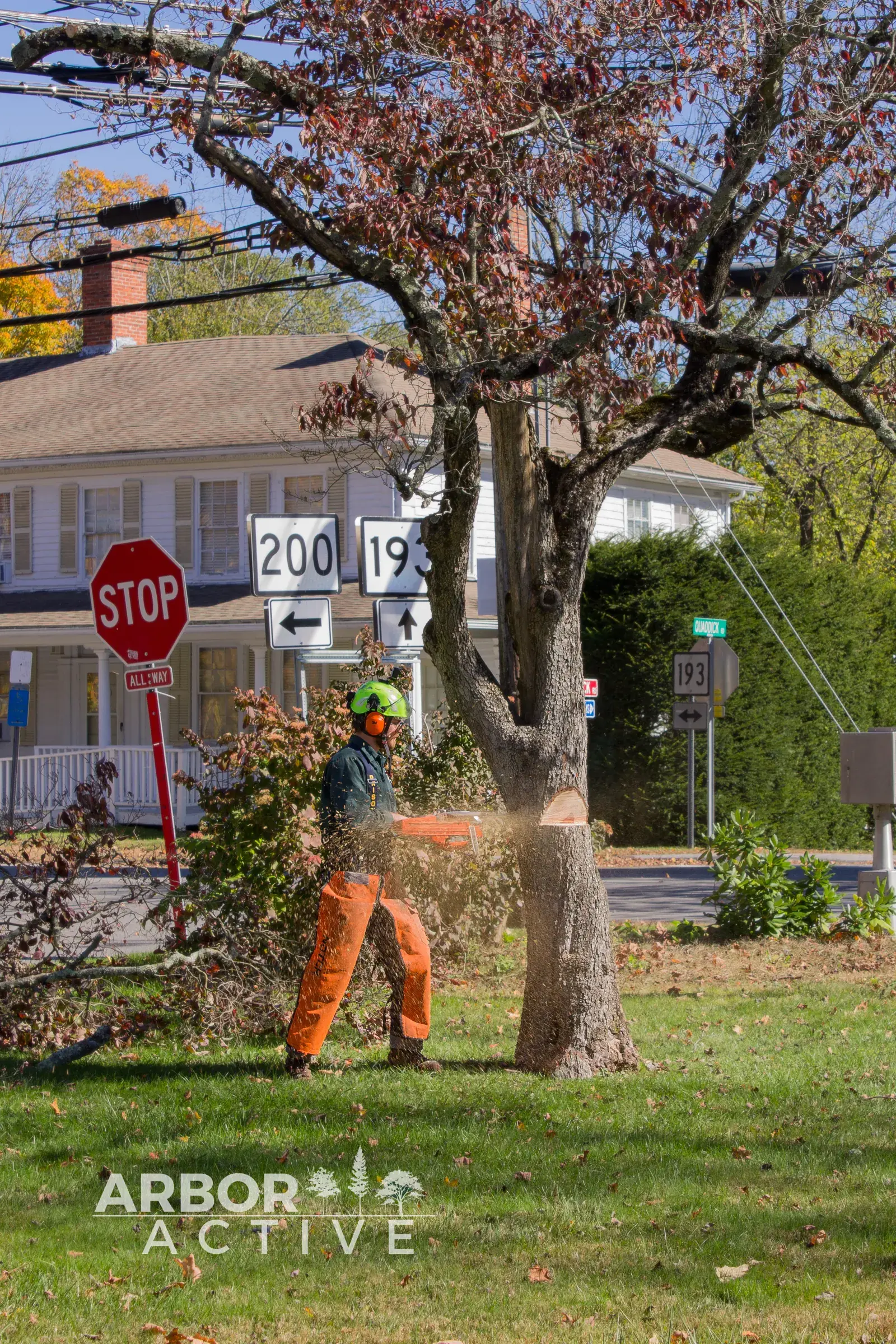
Is Your Tree
Safe?
Our certified arborists evaluate your trees for structural problems, decay, and failure risk so you can make informed decisions about your property.
What Is a Tree Risk Assessment?
A tree risk assessment is a thorough evaluation of a tree's structure, health, and surroundings to determine how likely it is to fail and what could be damaged if it does. This includes checking for internal decay, weak branch unions, root damage, lean, and proximity to homes, driveways, or walkways.
Our arborists are ISA Tree Risk Assessment Qualified (TRAQ), which means they've completed specialized training in the industry-standard methodology used by insurance companies, municipalities, and courts across the country.
You'll receive a clear, written report with risk ratings and recommended actions. No jargon, no guesswork.
When Do You Need a Tree Risk Assessment?
A tree is leaning more than it used to
You see large cracks in the trunk or major branches
Mushrooms or fungal growths are appearing at the base of the tree
A major storm recently hit your area
You're buying or selling a property and want to know the tree conditions
Construction is planned near existing trees
Dead branches are falling, even in light wind
Your insurance company or attorney has requested a report
A neighbor is concerned about a tree near the property line
You want peace of mind about a large tree near your home
What We Look At
Every assessment covers three key factors:
1. Likelihood of Failure
We evaluate the tree's structure: root plate stability, trunk integrity, branch attachment strength, and signs of internal decay.
2. What Could Be Hit
We identify "targets" in the fall zone: your home, garage, driveway, walkways, play areas, power lines, and neighboring properties.
3. Potential Consequences
We estimate the severity of damage if the tree or a branch were to fail. This determines the overall risk rating.
Risk Ratings Explained
Each tree gets a clear risk rating based on the ISA standard:
Assessment Tools & Methods
We go beyond a visual inspection. When needed, we use advanced diagnostic tools to see what's happening inside the tree.
Visual Assessment
A thorough walk-around evaluation of the tree's crown, trunk, root flare, and surrounding site conditions. This is where most problems are identified.
Sounding & Probing
We tap the trunk with a mallet to listen for hollow spots, and probe areas of concern to check for soft or decayed wood.
Resistance Drilling
A micro-drill measures wood density as it passes through the trunk. This reveals internal cavities, cracks, and decay that can't be seen from outside.
Aerial Inspection
Our climbers inspect the upper canopy and branch unions up close. Many defects like included bark, cracks, and dead stubs are only visible from above.
What You'll Receive
Written Risk Report
A detailed, plain-language report covering each tree assessed. Includes species, size, condition, defects found, risk rating, and specific recommendations. Suitable for sharing with your insurance company, attorney, or HOA board.
Priority Action Plan
Trees are ranked by urgency so you know what to address first. We include cost estimates for recommended work like pruning, cabling, or removal so you can plan and budget.
Photo Documentation
Each defect is photographed and labeled so you can see exactly what we found. Photos are included in the report and can be used for insurance claims or property records.
Risk Assessment FAQ
How much does a tree risk assessment cost?
Costs vary based on the number of trees and level of detail needed. A single-tree assessment typically starts at $150 to $300. Multi-tree property assessments are priced per tree with volume discounts. We'll give you a clear quote before we start.
How long does an assessment take?
A single tree takes 30 to 60 minutes depending on size and complexity. A full property assessment may take half a day or more. We'll let you know the expected timeline when you book.
Will I need to remove the tree?
Not necessarily. Many risk issues can be addressed with pruning, cabling, bracing, or changing the target area (like moving a picnic table). Removal is recommended only when other options aren't practical.
Can I use the report for insurance claims?
Yes. Our TRAQ-certified reports are accepted by insurance companies and are suitable for legal proceedings. They follow the ISA Best Management Practices standard.
What's the difference between a risk assessment and a regular tree inspection?
A regular inspection tells you if a tree is healthy. A risk assessment goes further by evaluating the likelihood and consequences of tree failure. It's a more formal, documented process used for decision-making and liability management.
Care for Your
Trees & Property.
At ArborActive, we take genuine pride in providing thoughtful, hands-on stewardship for your trees and landscape because healthy, beautiful trees matter. No matter the size of your property, whether it's a small yard or a larger estate, every client receives the same consistent, high-quality care from our certified team. That includes our core services as standard: expert invasive plant management to protect your space, precise scientific pruning that truly strengthens tree structure and supports long-term health, and reliable Plant Health Care diagnostics and treatment to catch and address issues early, delivering proactive, science-driven results you can see and trust year after year.
ISA Board Certified Master Arborists | TRAQ Risk Assessment | Invasive Plant Management Specialist
Scientific Preservation for CT & MA Property Owners