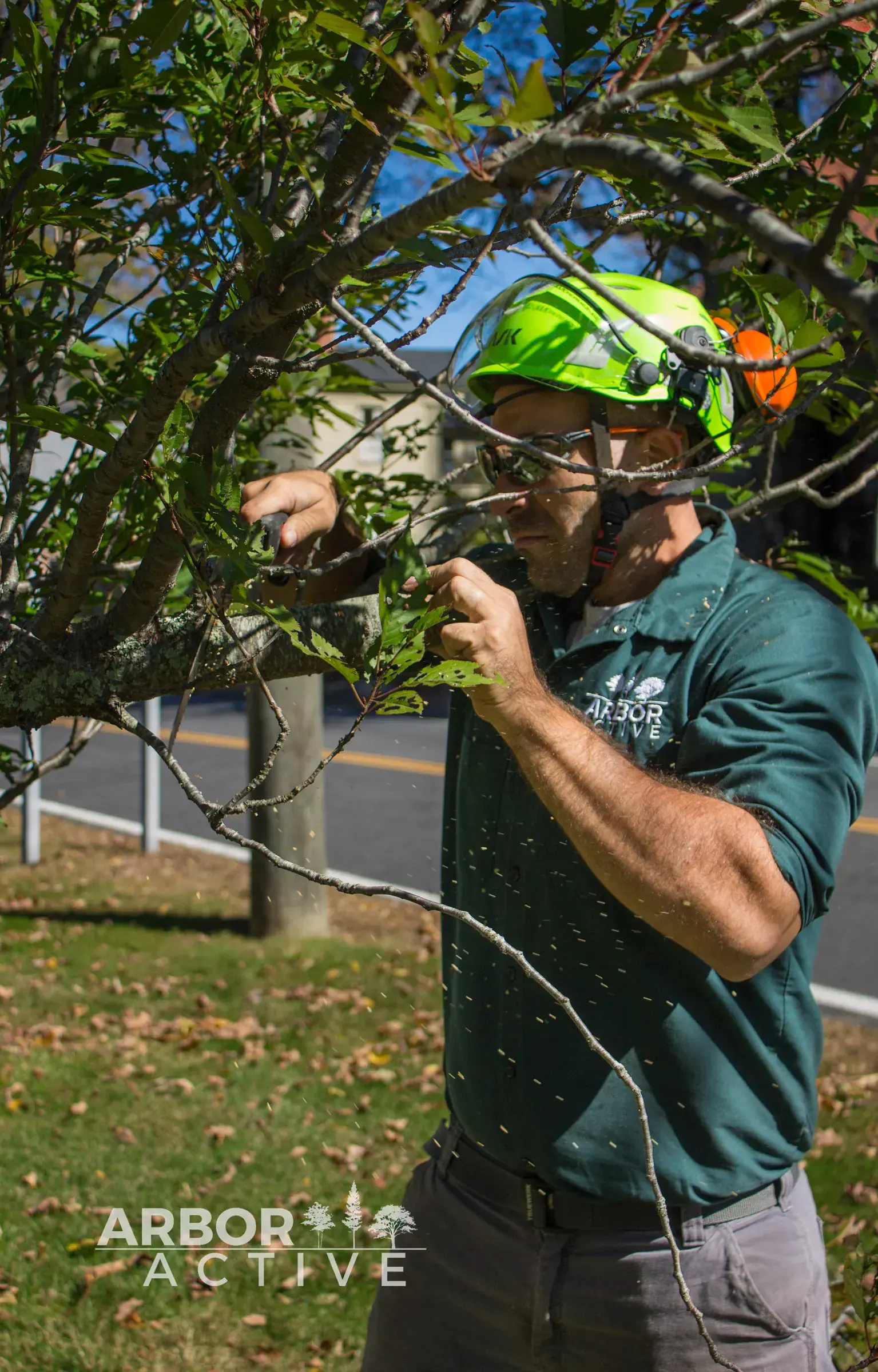
The Right Cut
Makes the Difference
Proper pruning keeps your trees healthy, safe, and beautiful. Our certified arborists know where to cut and, just as important, where not to.
Why Pruning Matters
Trees don't prune themselves. Dead branches, crossed limbs, and weak branch attachments all create problems over time. Dead wood falls. Crossed branches rub and create wounds that invite disease. Weak unions split apart in storms.
Professional pruning addresses these problems before they become emergencies. A well-pruned tree is stronger, healthier, and safer than one left to grow unchecked.
Important: Bad pruning is worse than no pruning. Topping, lion-tailing, and flush cuts cause permanent damage. Our arborists follow ANSI A300 pruning standards on every job.
Types of Pruning We Provide
Deadwood Removal
Removing dead, dying, and broken branches from the canopy. This is the most common and most important type of pruning. Dead branches fall without warning and can damage property, vehicles, and injure people.
Best time: Can be done any time of year. Dead wood is easiest to spot when the tree is in full leaf.
Crown Thinning
Selectively removing interior branches to improve air circulation and light penetration. This reduces wind resistance (less likely to blow over), lowers disease pressure, and lets more sunlight reach your lawn and garden below.
Best time: Late winter (dormant season) or after spring leaf-out when the full canopy is visible.
Crown Raising
Removing lower branches to provide clearance over driveways, walkways, roofs, and lawns. Essential for maintaining sight lines, allowing mowing access, and keeping branches off structures.
Common for: Branches hanging over driveways, touching roofs, blocking walkways, or interfering with lawn mowing.
Crown Reduction
Reducing the overall size of the canopy by cutting back to lateral branches. This is NOT topping. Crown reduction uses proper cuts that maintain the tree's natural shape while reducing height or spread.
Common for: Trees that have outgrown their space, blocking views, or growing into power lines.
Young Tree Training
The most cost-effective pruning you can do. Training young trees early prevents the structural problems that require expensive corrective work later. We establish a strong central leader and good branch spacing.
Best time: Within the first 5 to 10 years after planting. Small corrections now prevent big problems later.
View Restoration
Strategic pruning to open sight lines to water, mountains, or other views without removing the tree. We use a combination of crown raising, thinning, and windowing to frame the view naturally.
Popular in: Waterfront properties, hillside homes, and properties with scenic views blocked by overgrown canopies.
Cabling & Bracing
Some trees have structural defects that make them risky but don't require removal. Cabling and bracing systems provide supplemental support to reduce the chance of failure.
Steel Cable Systems
High-strength cables installed in the upper canopy to limit the movement of weak branch unions. Reduces the risk of splitting during storms.
Brace Rods
Threaded steel rods installed through the trunk or branches to hold together splits or weak forks. Often used in combination with cables.
Dynamic (Cobra) Systems
Flexible synthetic systems that allow natural movement while providing a safety net. Less invasive than steel and better for the tree long-term.
When Cabling Makes Sense
- A large tree with a split trunk (co-dominant stems)
- Heavy lateral branches that extend far from the trunk
- Historic or irreplaceable trees worth preserving
- Trees near high-value targets (homes, parking areas)
- You want to save the tree rather than remove it
"Cabling a $50,000 tree costs a fraction of removing it, and keeps your property value, shade, and aesthetics intact."
Our Pruning Process
Consultation
We meet at your property, assess your trees, and discuss your goals. Whether you need clearance, safety pruning, or aesthetic shaping, we'll explain exactly what we recommend and why.
Written Proposal
You receive a clear quote with the scope of work, number of trees, and pricing. No surprises. We answer any questions before we start.
Pruning Day
Our crew arrives with the right equipment. All cuts follow ANSI A300 standards. We use proper target pruning techniques so wounds close quickly and the tree stays healthy.
Full Cleanup
We chip all brush on site and remove all debris. Your property is left cleaner than when we arrived. We walk the site with you to make sure you're satisfied.
Tree Pruning FAQ
How much does tree pruning cost?
It depends on the size of the tree, how much work is needed, and access. Small ornamental trees might be $200 to $500. Large shade trees typically run $600 to $2,000+. We provide free estimates.
When is the best time to prune?
Most trees can be pruned year-round, but the ideal time varies by species. Oaks should only be pruned in the dormant season (November through March) to prevent Oak Wilt. Most other trees do well with winter or early spring pruning.
Will pruning hurt my tree?
Proper pruning does not hurt the tree. In fact, it improves health by removing dead wood, improving air flow, and correcting structural problems. Bad pruning (topping, lion-tailing) absolutely damages trees, which is why it matters who does the work.
How often should trees be pruned?
Most mature trees benefit from pruning every 3 to 5 years. Young trees should be trained every 1 to 3 years for the first decade. High-risk trees near homes may need annual deadwood removal.
What's the difference between pruning and trimming?
In the tree care industry, these terms are often used interchangeably. 'Trimming' usually refers to shaping hedges and shrubs. 'Pruning' refers to the selective removal of specific branches for health, safety, or structural reasons.
Care for Your
Trees & Property.
At ArborActive, we take genuine pride in providing thoughtful, hands-on stewardship for your trees and landscape because healthy, beautiful trees matter. No matter the size of your property, whether it's a small yard or a larger estate, every client receives the same consistent, high-quality care from our certified team. That includes our core services as standard: expert invasive plant management to protect your space, precise scientific pruning that truly strengthens tree structure and supports long-term health, and reliable Plant Health Care diagnostics and treatment to catch and address issues early, delivering proactive, science-driven results you can see and trust year after year.
ISA Board Certified Master Arborists | TRAQ Risk Assessment | Invasive Plant Management Specialist
Scientific Preservation for CT & MA Property Owners